Timeline
1457: Albert-Ludwigs-Universität (Freiburg University) is founded. Today, the University of Freiburg, with 30,000 students and just as many affiliated faculty and scientists, has become a major source of progressive thought in Freiburg, as well as a center for technological innovation. In particular, The Albert-Ludwig Universitat Freiburg, located in the Black Forest, is one of Germany’s oldest forestry institutions and pioneers sustainable forest management in the Black Forest.
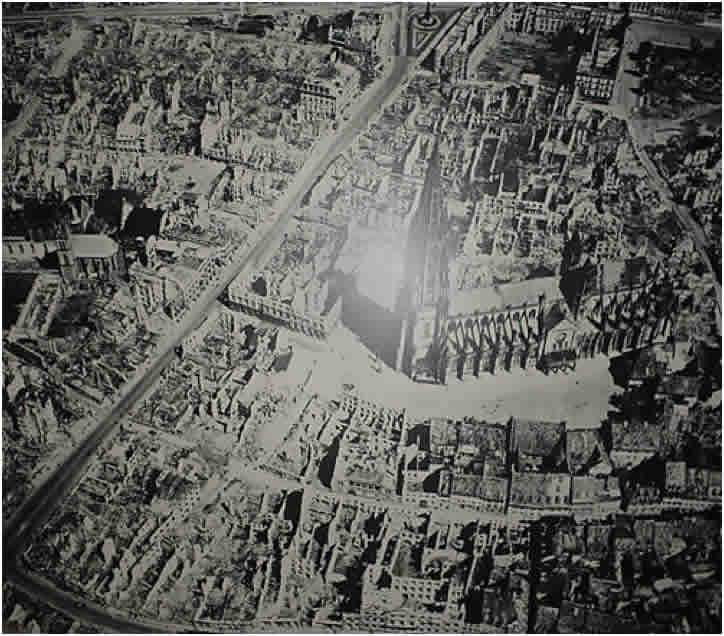
1945: Almost the entire center of Freiburg was destroyed by WWII bombing, requiring the city to be rebuilt from the ground up. While this was occurring, citizens actively voiced concern over excessive car domination on streets, and were able to influence how the urban fabric was reconstructed.
1969: transportation policy in Freiburg implemented an official policy to prioritize environmentally-friendly modes of transportation (pedestrian pathways, cycling, trams) which further influenced how the city was developed.
1973: Freiburg's old town center becomes car free
1975: Massive ecologically motivated protests occurred around the construction of a French chemical factory near Freiburg and around the construction of three nuclear plants in nearby German, French and Swiss cities. These ultimately successful campaigns against nuclear power are considered to be the founding “legends” of the environmental movement. Following these protests, there was at first continued mobilization primarily among students and anti-nuclear activists, and a few visionaries and artists searching for alternatives to nuclear power.
1976: Germany's "environmental programme" created. The program still sets the norms of environmental policy today.
1983: Greens elected into the Bundestag, giving way to an institutionalization of the Germany environmental movement.
1986: Following the Chernobyl disaster, the Freiburg’s municipal council made the decision to abandon nuclear power, and Freiburg became one of the first German cities to adopt a local concept of energy supply to protect the planet; Solar energy was to become the new principle source of energy. Freiburg became one of the first cities in Germany to establish an Environmental Protection Office.
1990: 30kph zones introduced for almost all residential streets
1991: low cost "environmental ticket" introduced for regional tram and bus serve, causing public transportation use to skyrocket.
1993: Forest Stewardship Council founded. Remains responsible for establishing guidelines for sustainable forestry in Germany
1996: Freiburg passes Climate Protection Concept resolution to reduce CO2 emissions to below 25% below 1992 levels by 2010. Target areas under this resolution included energy reductions from private and business buildings, industry and transportation.
1999: German government began the 100,000 solar panel roof program which provided low interest loans, to homeowners who installed solar panels of at least 1 KW
2001: National renewable energy law passed in Germany
2002: Dieter Solomon is elected mayor of Freiburg; the only member of the Green party be mayor of a town over 100,000 people in Germany. The green party has the biggest stronghold in Freiburg of any Germany city, regularly receiving 25% of the vote.